


How Much Plastic Does Laundry Detergent Really Waste in Australia?
Picture this: oceans choked with wrappers, bottles bobbing in waterways, trucks hauling bins full of used takeout boxes. Yet a quiet giant hides behind bathroom doors, tucked between sink and wall. Every seven days, without fuss, Australians reach for it - liquid sloshing inside thick bottles meant to last just one cycle. These jugs pile up faster than most notice, stacking beside recycling bins like uninvited guests. Rarely mentioned, always accumulating.
One trip through your washing routine adds up - slowly piling containers by the bin. Those slick labels claiming recyclable status? They often skip the full story behind Australian collection systems.
Plastic bottles pile up fast when you wash clothes often. Recycling them sounds good but most never get properly processed anyway. A different option shows promise - thin strips of soap that dissolve in water instead. These leave behind almost no trash by design. Less packaging means less junk down the road always.
The Hidden Plastic in Everyday Laundry
Most Australian households wash clothes three to five times per week. Over the course of a year, this routine produces a constant stream of detergent packaging waste.
A typical household may use:
1. 10–15 liquid detergent bottles per year
2. Rigid plastic bottles for each purchase
3. Additional plastic from caps, labels, and inner seals
Because laundry detergent is a repeat purchase, even small packaging choices quickly add up, creating a significant environmental footprint over time.
What Are Laundry Detergent Bottles Made From?
Laundry detergent bottles are commonly made using:
1. High-density polyethylene (HDPE) or PET plastic
2. Polypropylene caps
3. Adhesive labels
4. Residual detergent left inside after use
While these materials are technically recyclable, they must be clean, properly separated, and processed through suitable facilities. In real-world recycling systems, this doesn’t always happen.
Research published by CSIRO shows that plastic recycling success in Australia depends heavily on contamination levels, material types, and local processing capacity. This means that not all plastic placed in recycling bins is actually recycled.
Recycling Myths vs the Reality in Australia
Many Australians believe that if something goes in the recycling bin, it automatically gets recycled. Unfortunately, this isn’t always the case.
Common recycling challenges include:
-
Bottles rejected due to leftover detergent
-
Caps and labels not processed together
-
Mixed plastics lowering recycling quality
-
Limited recycling infrastructure in some regions
As a result, a portion of detergent packaging still ends up in landfill or the environment, despite good intentions.
How Much Plastic Does Laundry Detergent Really Create?
Looking at the numbers makes the impact clearer.
If just one million Australian households discard:
-
10 detergent bottles per year
That equals: -
10 million plastic bottles annually
-
Thousands of tonnes of plastic requiring transport, sorting, and processing
This estimate doesn’t even include damaged bottles discarded before use, transport wrap, warehouse packaging, or manufacturing waste.
Because laundry is unavoidable, reducing plastic in this category offers one of the highest-impact opportunities for household waste reduction.
Why Liquid Detergents Are Especially Plastic-Heavy
Liquid laundry detergents create more waste than many people realise.
1. Bulky Packaging
Liquid detergents are mostly water, which requires:
-
Larger bottles
- Thicker plastic walls
- More material per wash delivered
2. Higher Transport Emissions
- Heavier products lead to:
-
Increased fuel use during transport
- Higher emissions per unit
- Greater environmental cost before the product is even used.
3. Overuse and Waste
Many households pour more detergent than needed, which results in:
-
Faster bottle replacement
-
More plastic waste over time
Are Laundry Pods a Plastic-Free Solution?
Laundry pods are often marketed as a modern alternative, but they still rely heavily on plastic packaging.
Common issues include:
-
Rigid plastic outer tubs
- Individually wrapped capsules
- Higher plastic use per wash compared to sheets
While convenient, pods don’t eliminate plastic waste and they simply change how it’s packaged.
Why Reducing Plastic at the Source Matters Most
True, tossing bottles into bins helps - yet that single act won’t fix the mess piling up. What gets reused barely touches what keeps flowing out.
When it comes to cutting down on plastic, starting early makes a bigger difference than waiting to recycle later, say groups like Australia's APCO.
What lasts longest? A package you never make.
How Laundry Detergent Sheets Reduce Plastic Waste
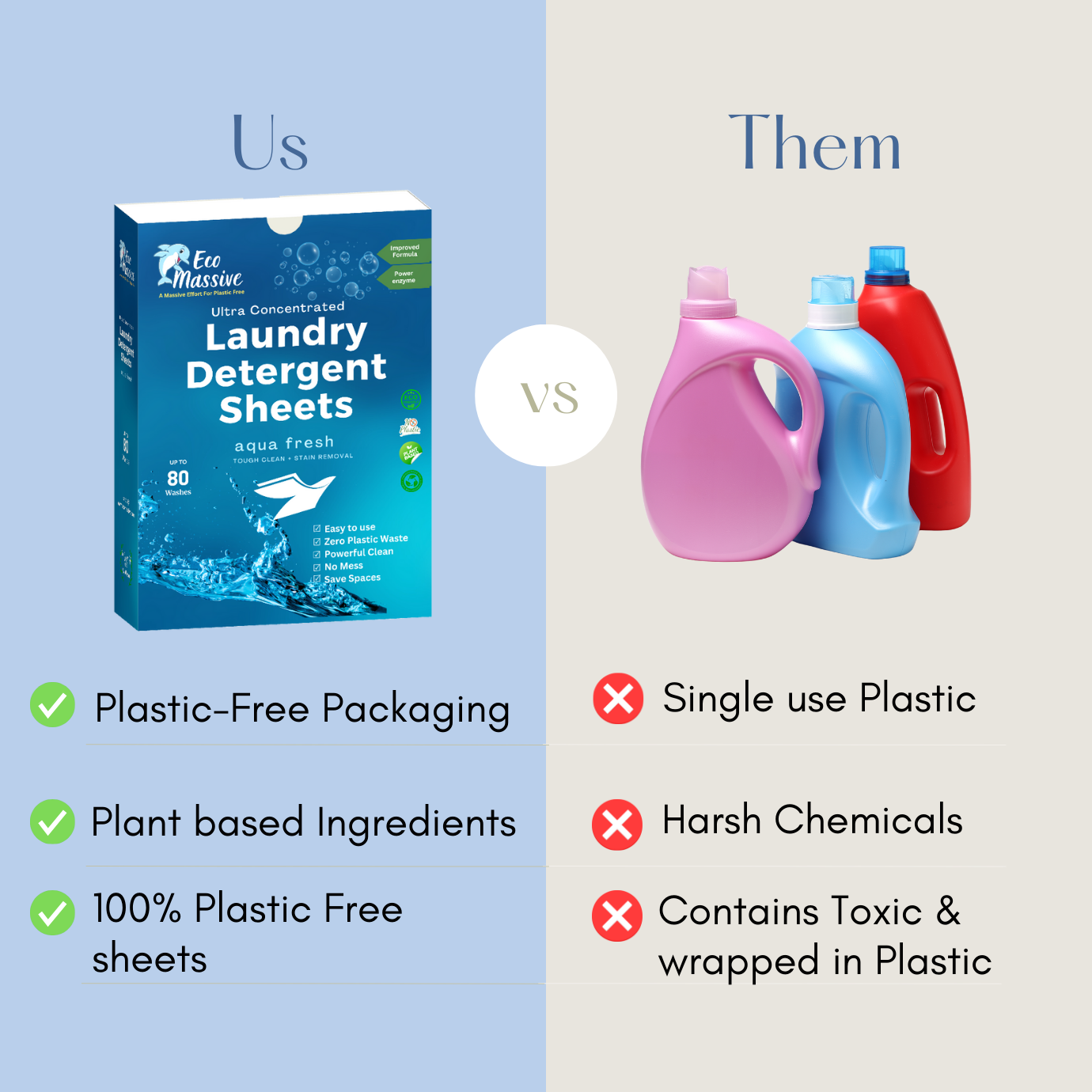
Laundry detergent sheets are designed to remove many of the issues caused by traditional packaging.
Key benefits include:
-
No rigid plastic bottles
-
Minimal outer packaging
- Lightweight and compact design
- No caps, scoops, or dispensers
Because sheets are concentrated and water-free, they eliminate the need for bulky containers altogether, making them one of the lowest-plastic options for everyday laundry.
Plastic Waste Reduction at the Household Level
When a household switches from liquid detergent to sheets:
-
Dozens of plastic bottles are eliminated over time
- Storage space improves
- Waste output decreases consistently
Unlike recycling, this reduction happens automatically with every wash, without requiring extra effort or behaviour changes.
Environmental Impact Beyond the Bin
Plastic waste doesn’t stop at landfill. It affects:
-
Marine ecosystems
-
Wildlife
- Microplastic contamination
- Long-term soil and water health
Laundry plastic waste contributes slowly but continuously to these crazy issues, making it a significant category for change.
Are Plastic-Free Laundry Alternatives Less Effective?
A common concern is whether reducing plastic means sacrificing performance.
Modern laundry detergent sheets are formulated to:
-
Dissolve fully in water
- Distribute detergent evenly
- Work in cold washes and front-load machines common in Australia
For everyday laundry needs, many households find sheets just as effective without the mess or waste.
Frequently Asked Questions
How much plastic is in a detergent bottle?
Most detergent bottles weigh between 80–200 grams of plastic, excluding caps and labels.
Are detergent bottles actually recycled in Australia?
Some are, but contamination and mixed materials significantly reduce recycling success.
Are laundry detergent sheets plastic-free?
High-quality sheets eliminate rigid plastic bottles and dramatically reduce overall plastic use.
Is reducing plastic better than recycling?
Yes. Most sustainability authorities agree that reducing plastic is more effective than recycling alone.
A Simple Change with Long-Term Impact
Stuff made of plastic piles up in ways people rarely notice. From bottles bought without a second thought - take cleaning soap for clothes - waste sneaks in where least expected.
A fresh approach to soap containers might stick around longer than expected. Shifting the way we handle washday stuff shapes greener outcomes over time. Small tweaks, not flawless systems, cut down on plastic waste.
Now and then, a fresh look at laundry habits begins the shift. What changes is not always obvious right away.
References:
1. Australian Packaging Covenant Organisation (APCO) – Packaging targets
https://apco.org.au/our-work/packaging-targets
2. CSIRO – Plastic recycling in Australia
https://www.csiro.au/en/research/environmental-impacts/plastics
3. Eco Massive – Eco-friendly laundry detergent sheet in Australia
https://www.ecomassive.com/pages/laundry-detergent-sheet-australia
https://www.ecomassive.com/products/laundry-detergent-sheets
https://www.ecomassive.com/blogs/news/blog-1-why-laundry-sheets


Leave a comment
This site is protected by hCaptcha and the hCaptcha Privacy Policy and Terms of Service apply.